The first thing we built is a boat with nothing to do
No cargo, no patrols, no port, no money. Just a hull, some water and a throttle. If that is not fun on its own, nothing we build on top of it will save us.
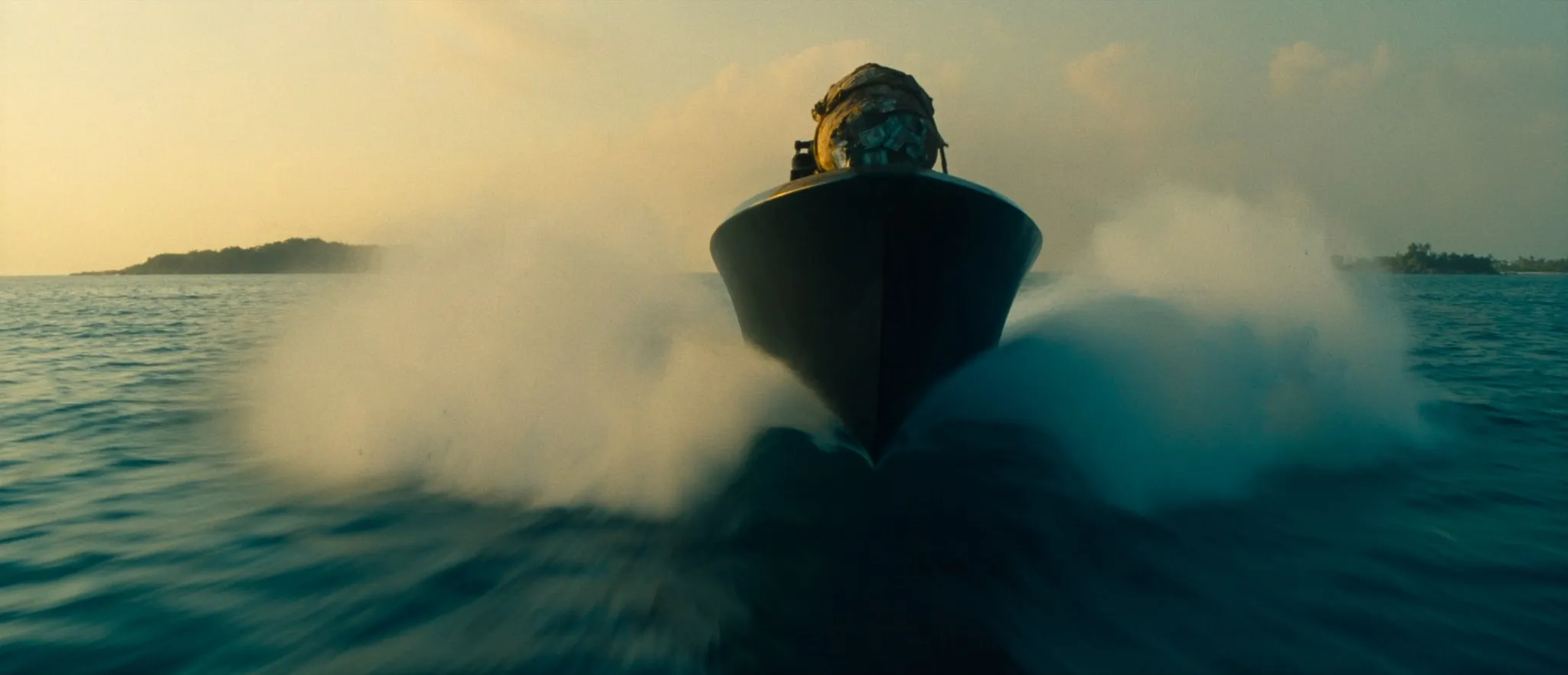
There is a version of this project where the first milestone is a vertical slice. One port, one run, a patrol boat, a stash box, some numbers going up. It demos well. You can show it to people and they nod.
We did not build that. The first milestone is a boat in open water with absolutely nothing to do.
Why
Because the honest failure mode for this game is not “the economy was unbalanced” or “the heat system was confusing.” It is “driving the boat felt bad and nobody wanted to do it twice.”
Skull and Bones had a reported budget somewhere north of a hundred million dollars and spent about eleven years in development, and the thing people said when it finally arrived was that the sailing felt worse than a game from 2013. You cannot fix that with content. You cannot fix it with a better loot table. If the moment-to-moment feel of the vehicle is wrong, everything you attach to it is decoration on a thing nobody enjoys operating.
So M0 is a boat toy. Throttle, trim, steering, waves, a camera at the helm. That is the whole build.
The exit test
One sentence, and it is deliberately brutal:
A stranger plays with the boat for five minutes unprompted and does not put it down.
Not a friend. Not somebody being polite. A stranger, with no explanation of what the game is going to be, who picks up a controller and just messes about.
If they put it down after ninety seconds, the answer is not to add cargo. The answer is that the numbers are wrong, and we go tune the numbers.
What is actually tunable
The game, at this stage, is about a dozen floats. How much the hull rises on swell. How much grip the keel has before it lets go. The speed at which the boat stops pushing water and starts skimming across it, and how much of its bite it loses when that happens. How fast the engine spools up, and how much slower it spools down, because a boat that stops instantly feels like a car.
That last one matters more than it sounds. Spool-down being slower than spool-up is the difference between a boat with weight and a boat that feels like it is on rails. It is one number.
Where it is right now
The scaffold exists. It builds the ocean, the hull, the camera and a debug readout at runtime, so there is nothing to wire up by hand. Two rounds of physics fixes have already gone in, mostly around forces not being normalised against mass, which made the whole thing handle like the hull weighed nothing.
Full honesty: this code was written without Unity open. It uses only stock APIs to keep the risk down, but it has not been compiled, and there is a debugging pass waiting whenever it first gets opened properly. That is normal for a scaffold and I would rather say it out loud than have somebody discover it.
What happens if it fails
We tune. If it still fails, we find out now, at the cost of a few weeks, instead of after building an economy, a surveillance system and a port on top of a boat nobody likes driving.
That is the entire point of doing it in this order.