The boat has work to do now
Four boats, rod-and-reel fishing, pot strings and a persistent paper trail are playable locally, with more work ahead before the next report release and a public MMO.
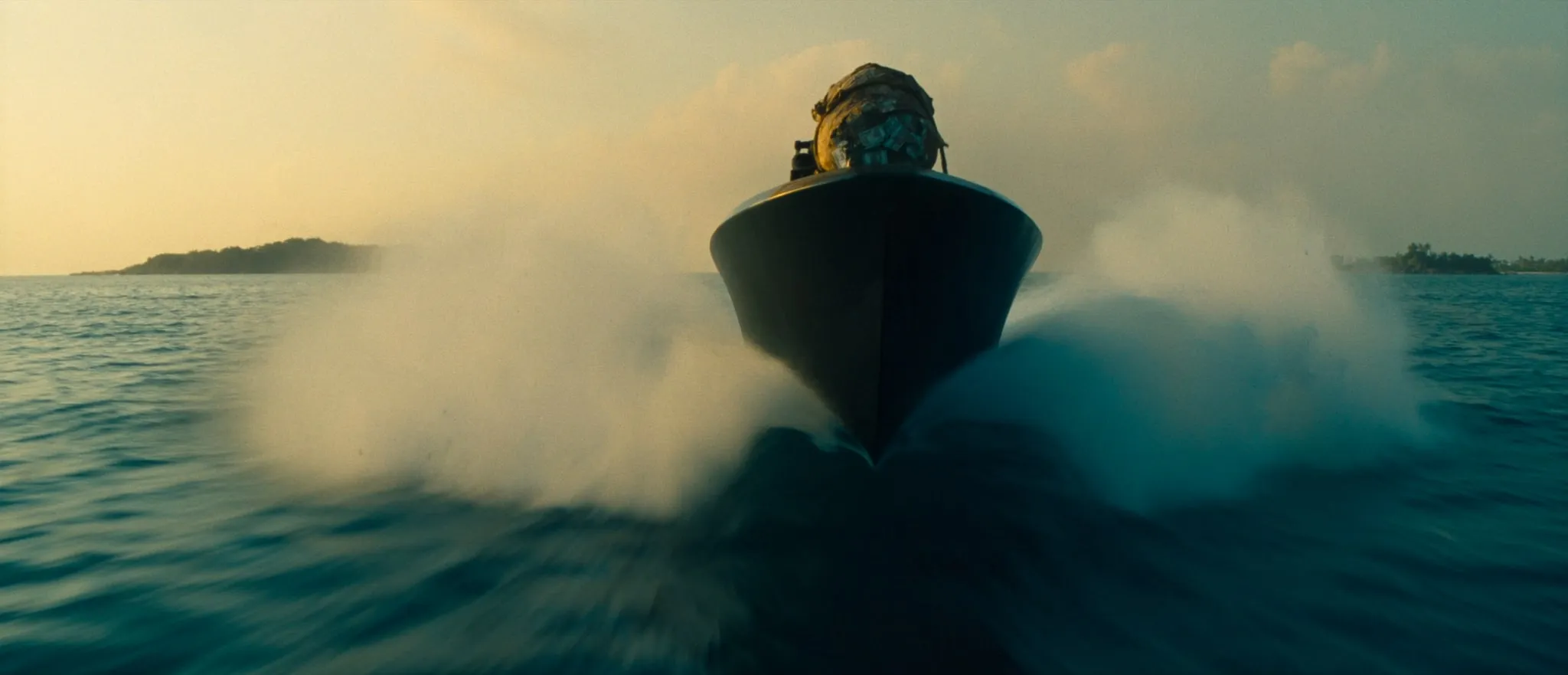
The first build was a hull, some water and a throttle. There is considerably more to do aboard it now.
This is a catch-up on the local prototype, not an announcement that the public MMO is ready. Some systems are in the current playtest build. Others have passed verification in a separate candidate and have not replaced that build yet. That distinction matters, especially when the system is responsible for remembering what happened to your boat and your money.
Four boats and a working deck
The roster now includes the go-fast, fishing launch, RHIB and the 42-foot Express. They have different handling, fuel use, cargo arrangements and working positions, with saved ownership through the boatyard.
The Express is based on the owner’s boat photographs and survey. Solo driving works from both the lower helm and the tower. First- and third-person views and character appearance creation are also in the prototype. The art pipeline remains custom Higgsfield work rather than stock asset substitutions.
There is still boat work left: walkable cabin and tower access, shared tower control, more faithful instruments, animated shaft gear and persistent per-vessel tank inventories. A working tower camera is not the same thing as finishing every way a crew should move around and operate that boat.
Fishing is not hauling one pot forever
Rod fishing and pot work are now separate activities.
Trolling puts two lines behind the boat, one in a holder on each side. A trolling strike hooks automatically; bottom fishing uses a deliberate hook set. The tackle has a wide conventional reel, moving spool, tension-dependent rod bend, payout and retrieve sounds, and fish that can be seen as they reach the surface. A landed catch shows what it is and what it is worth.
Pots use custom color-coded ball floats and linked strings. The full-spread loop requires deploying all six pots, leaving them to soak and coming back to haul them. Individual pots, partial landings and progress survive a restart.
Full boat-driven trips have been checked on all four hulls, combining rod catches, pot recovery and selling the catch. The launch and Express can also carry fishing work alongside freight, with reserved deck space, below-deck stowage, inspections and separate payments. Shared crews have an opt-in alongside fuel-assistance loop.
That establishes that the work can be completed and accounted for. It does not settle whether a fishing trip is enjoyable for the tenth time, or whether the drag mix sounds right to someone who spends their weekends offshore. Those are still human playtest questions.
More reasons to leave port
The local loop also includes a compact holding location with intake and release, original-cargo diving recovery, an attended fictional production-to-buyer route, and an NPC goods broker with finite stock and funded buyers.
These are deliberately limited implementations. Own-cargo recovery is not shared wreck salvage or insurance. The broker is not a player-owned shop. Local jail intake is not a complete online sentence or character-death system. Each adds useful work to the existing boat loop without pretending its whole expansion family has shipped.
Your history is starting to matter
The first local standing system is in the current playtest build: Feared on the water, Known in ports, Clean on paper. Recorded activity feeds three-port history and specific uses such as intel pricing, boat discounts and access. Shared-world standing authority and human tuning of the weights remain open.
The newer patrol-report candidate records actual surface-patrol sightings and shows transmitted reports in a regional history. AIS can identify the observed hull. An unidentified sighting stays unidentified; a later identification does not rewrite the earlier report or invent a captain who was never observed.
We have also tested killing and restarting the process at nine points around report publication, record commits and removal from the pending queue. The raw record audit checks that published reports finish once and unpublished temporary files do not become evidence. Those are process-crash tests, not a claim of protection against every power failure.
That report candidate has passed visible gameplay and restart checks, but it is not in the launcher build yet. The next storage candidate compiles and the tooling suite passes 2,454 tests. Its native full-store, damaged-file and query/restore checks have not run, so those release gates remain open. No new evidence-derived penalties are enabled.
More than four players, not a public MMO yet
The target is a persistent world with multiple crews, not a four-player cap. Local network and account foundations have been tested through 32 players, including reconnects, durable transactions and controlled transport faults.
Thirty-two is an engineering test population, not the launch promise or final limit. Longer profiling, memory-growth investigation, broader collision and correction checks, real wide-area networking, public account security and physical-world recovery still stand between this and a public service.
Linux server packaging, isolation, monitoring, backups and restore drills also remain. VPS deployment is deferred while the local game develops.
What comes next
The immediate job is finishing the patrol-report storage checks, reviewing the measured costs, running the affected playable regressions and only then replacing the playtest build while retaining rollback.
Beyond that, the roadmap calls for deeper source relationships, shared fishing ownership and buyer budgets, shared production and goods transactions, and account-owned custody and death recovery. Player phone calls are requested, but provider review, routing, call controls and abuse/accessibility safeguards still need implementation.
Full playable law factions, ownable fronts, contested ports, dockside robbery and fictional combat sit behind further scope and authority decisions. A jet ski is a conditional water experiment; land vehicles and player aircraft remain deferred. Research documents are inputs, not a promise to build every proposal.
The other unfinished milestone is still the oldest one: put this in front of people who did not build it. Boat feel, crew coordination, stealth choices, fishing enjoyment and the balance between legitimate work and crime need that evidence. A large green test count cannot provide it.